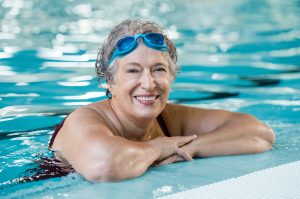

Carol LaFayette-Boyd is one of Canada’s rising athletics stars.
Notably, LaFayette-Boyd is “rising” to exceptional athletic status at the age
of 77 years. Setting a new
world age-group record in the W75 200-meter race at the 2019 Canadian Masters
Indoor Championships in Edmonton, the Saskatchewan native added to her
plethora of age-matched world records and international gold medals, and her title
of World Masters Athletics’ 2018 Female
Athlete of the Year.
LaFayette-Boyd began competing in Masters track and field at age 50, returning
to competition after having participated in track and field and basketball in
high school. She attributes her athletic success to eating a balanced diet,
sleeping well, and stretching, and says that she feels healthier at age 75 than
she did at 35. Finally, consider this – the earliest officially recognized world record for the women’s 100-meter
race occurred in 1922: 13.6 seconds by Czechoslovakia’s (now Czech Republic and
Slovakia) Marie Mejzlíková II at 19 years of age. Carol LaFayette-Boyd’s personal best 100-meter
race time is 13.75s at age 60! While LaFayette-Boyd’s feats are spectacular on
their own, she is part of a growing number of Masters athletes forcing us to
consider new frontiers in human performance.
Masters sport has been regarded as an ideal facilitator of healthy
aging, and this article focuses on relevant discussions for Masters athletes 60
years of age and beyond. In particular, we will highlight our research program
that has focused on illuminating the voices and stories of Masters athletes
themselves. What are the individual and societal outcomes of Masters sport?
What are the considerations along with the positive and negative implications of
promoting active aging through sport?
What is Masters Sport?
Masters athletes train for and compete in organized sport at
regional, national, and international events. Masters sport provides a
competition opportunity for those outside of the ages considered conducive to
peak performance for a given sport. The minimum eligible age to compete is
typically 25-35 years, and participants are usually classified into 5-10 year
age bands with no maximum age limit. Notably, the World Masters Games (WMG) is
the largest multi-sport event in the world (in terms of competitor numbers),
hosting up to 30,000 athletes each quadrennial. To provide context, 11,000
athletes participated in the most recent Summer Olympic Games in Rio, Brazil.
The inaugural WMG in Toronto in 1985 hosted 5,000 athletes and the event has since
experienced explosive growth. A broad range of 30 different team and individual
sports are normally offered at the WMG, including weightlifting, athletics,
tennis, basketball, swimming, field hockey, and rugby. The Winter World Masters
Games typically includes events such as ice hockey, curling, and cross-country
skiing.
Perceived Benefits of
Masters sport
Masters sport
Although there is no consensus definition for healthy aging,
it is often agreed that Masters athletes are aging well from a physical
functioning standpoint. For example, studies have shown that older athletes
have better physical characteristics (e.g., muscle mass, strength, maximum
oxygen uptake) than less-active, age-matched peers (Geard et al., 2017).
However, healthy aging means more than simply being physically healthy. Much
less is known about the psychological and social benefits of Masters sport.
To begin to address this gap, our team
conducted in-depth interviews with 135 athletes (60 years of age and older) at
the 2009 (Sydney, Australia), 2013 (Turin, Italy), and 2017 (Auckland, New
Zealand) World Masters Games. Participants represented numerous sports across multiple
countries including Australia, Canada, England, Germany, New Zealand, and the
United States. We asked athletes questions about their sport experiences and
thoughts on lifestyle and aging. Athletes overwhelmingly confirmed that they
derive a range of benefits from participation in Masters sport. These benefits
are exemplified in the following quotes from one of our recent publications
(Horton et al., 2018) focused on female Masters athletes. Pseudonyms have been
used to protect participant identities.
Social Benefits
Nearly all women emphasized the social benefits accrued through participation in competitive sport and Masters games. Lisa (aged 72, swimming) commented:
“Masters (events) have given me an opportunity to meet women who will be my friends all my life.”
Psychological
Benefits
Similarly, the athletes outlined psychological outcomes gained from sport that positively impacted mental health, mindset, a sense of identity and self-concept. Doris (aged 70, track and field) said:
“Stress relief is one but it’s more than that…your perception changes…You see yourself, not just as the mother, the wife, the teacher, but as an athlete.”
Physical
Benefits
The women also validated findings on the physical benefits of sport. Betty (aged 70, weightlifting) shared:
“It gave me back my life, it really did. Because as the muscles became stronger, those weak joints were supported, pain lessened… you’ve got the stability there with the muscle.”
Ultimately,
Masters sport is perceived by participants as an extremely rewarding endeavour.
We speculate that this is due partly to competitive sport for older adults providing
distinct benefits beyond traditional forms of exercise and physical activity. Our
recent findings on older male athletes (Horton et al., 2019) highlight the
unique role that “competition” serves in Masters sport, as exemplified in the
quotes below.
Something About Competitive Sport
Neil (aged 74, weightlifting) commented on the motivational role of competition:
“Really, the competition gives me more of an incentive to work out, you have an incentive to keep your body in shape but I don’t think I would do it to the level that I do without competition.”
Nathan (75, swimming) compared competitive sport to a drug:
“Sports give you the really head-on adrenaline that you can’t get from other drugs.”
Our participants also spoke about the importance of winning and keeping score as key ingredients in what makes competitive sport special. Finally, and in a broader sense, Masters sport appears to give older adults an opportunity to cope with, adjust to, and negotiate aging; at the same time, it can lead to an avoidance or denial of physiological aging. Findings from Dionigi et al. (2013), below, demonstrate how Masters athletes simultaneously resist, redefine, and accept the aging process.
Negotiating Aging
For some older athletes, competitive sport is empowering because it allows for the perception that aging is being avoided. Lucy (aged 69, badminton) commented:
“You’re never too old to play, never too old. There’s no such thing as old . . . as long as you participate in it and enjoy it, then that’s the beauty of it…”
However, avoidance of aging can become problematic for individuals if it leads to a denial of the physiological realities of the aging process or a cultural expectation that everyone can or ‘should’ play sport as they age (see Dionigi et al., 2013).
For others, Masters sport provided a space to find new meanings later in life and make the most of current circumstances. Marlene (aged 66, swimmer) shared:
“…as a younger person I was never successful. I was never really good at something and when I discovered that at this age group I could win things and get recognition from it, it just really spurred me on … I never, ever considered myself to be a competitive person … but once I had got something it really kicked something awake in me and now I’m out there to win.”
Aging is a process of change. At the individual level, it appears that sport may help older adults perceive certain changes as positive (e.g., retirement as an opportunity for more leisure, travel, and friendships through sport). Sport is a unique leisure experience and can undoubtedly benefit many older adults. Those promoting sport for older adults may wish to highlight the wide range of positive outcomes that older athletes tell us they are experiencing, but also recognize the barriers to participation, as detailed below.
Implications and
Complications of Promoting Masters Sport
Complications of Promoting Masters Sport
Our participants were clearly advocates for Masters sport,
and many saw themselves as having the potential to serve as “role models” for
less active older adults. Consistently, the Canadian government is using sport
as a tool to encourage increased
participation in physical activity given that only 12% of older Canadian adults
report meeting recommended physical activity levels (Statistics Canada, 2015).
However, the research findings relating to Masters athletes as role models are
unclear. For example, Horton et al. (2013) provided evidence that older adults
who already participate in at least moderate levels of physical activity may be
motivated by Masters athlete role models to increase their involvement. However,
the authors also caution that elite Masters athletes can be perceived by inactive older adults as intimidating
and might even discourage health-related behaviour change. Despite this nuance,
many Masters athletes in our recent works (Horton et al., 2018; Horton et al., 2019)
expressed that they could inspire other older adults to become more active, yet
more research in this area is needed.
Role
Modeling
Some participants spoke about their social roles as perceived by others. Lucinda (83, swimming) stated:
“The mayor of my town always calls me the example for other elder people. ‘Look at her!’ You know geraniums? There’s a saying in Holland: Don’t sit back with the geraniums – get out.”
Furthermore, several participants discussed their own beliefs with respect to their roles. Nathan (75, swimming) told us:
“I have tried to convince people that I swim with who don’t compete that they should try competing.”
In addition to their potential status as role models, Masters athletes often spoke about being physically active as simply the “right” thing to do. While this may seem benign on the surface, there may be some complexity worth considering. Masters sport is primarily a positive experience for participants, but there is likely potential to improve the experience for everyone. For example, Masters sport may be associated with an increased risk of injury for older adults compared to other forms of physical activity (McKean et al., 2006). Moreover, those who have an “obsessive passion” with their sport may feel controlled by their activity and experience poor psychological and social functioning as a result (Young et al., 2015). Finally, our interviews revealed a moralizing component (i.e. an overly critical point of view on issues of right and wrong) to Masters sport. Many athletes were keen on conveying a moral obligation to stay fit and healthy through exercise and sport. They were eager to spread their message about the individual and societal benefits of sport and exercise, as well as the consequences of sedentary behaviour. Non-participation in physical activity was, at times, seen as irrational, and with this came a subtle and somewhat critical view of those who are sedentary (see also Gard et al., 2017). Some of the athletes we spoke to could be considered exercise evangelists whose well-intended encouragement risked marginalizing peers who are less active (Horton et al., 2018).
Evangelical
About Exercise
Some participants put the responsibility of disease squarely on the individual. Justin (aged 90, swimming) said:
“I mean how could you, when you’re given this beautiful thing called a body in which we live, how could you not look after it and exercise it? This body is the most complicated piece of biological machinery in existence, and it should be cared for. If you don’t, then you don’t deserve to have health. It doesn’t take much to keep it healthy.”
Many athletes expressed concern with the burden of sedentary behaviour on the healthcare system. Betty (aged 70, weightlifting) noted:
“People will start getting more and more obese, the health system will fail, but the trouble is there is still a lot who just don’t want to listen, who still smoke, and they are the ones who will drain the system when you get to pension age.”
We believe that these sentiments may, in part, reflect widespread
beliefs in Western society about doing one’s share to stay healthy through high
levels of exercise, so as to not burden the healthcare system with “lifestyle
disease”. While we recognize the potential merits of encouraging increased
levels of physical activity participation among older adults, we should be
careful about framing certain lifestyles and forms of physical activity as superior
to others, especially given the many socio-cultural, political, and individual
circumstances which affect human health and behaviour.
Masters sport is an excellent opportunity for travel, challenging oneself, negotiating the aging experience, and establishing ongoing friendships. There is clearly a wide range of benefits that Masters athletes receive from their participation in sport events, which may extend beyond what traditional exercise can provide. As we have outlined, this may be partly due to the unique social and competitive nature of Masters sport. However, there are substantial barriers associated with participation in Masters sport, including high costs of travel, registration fees, and equipment. Moreover, the older adult population is diverse and participation in competitive sport will simply not be possible (or of interest) for all seniors due to varying circumstances. The Ontario 55+ Games, for example, addresses some of these issues by including a broad range of physical and cognitive activities (e.g., bridge, euchre, Nordic skiing, pickle ball, and ten pin bowling), which may cater more favourably to the diverse senior population. In addition, the Games are government funded which minimizes registration costs, and include qualifying events across many local Ontario districts, reducing travel expenses for those who do not wish to participate at the provincial level (assuming that provincial-level games typically require more extensive travel).
Conclusions
Masters athletes like Carol-LaFayette-Boyd are growing in
number and pushing new frontiers in human performance, prompting the need for
more research and application pertaining to athlete development later in life. For
those who have the resources and desire to compete, our participants’ stories
suggest that Masters sport may be an extremely rewarding endeavor in later life,
offering a range of physical, social and psychological benefits. In this spirit,
we encourage communities and active aging initiatives to embrace Masters sport as
a leisure option with the goal of engaging those who might benefit. However, it
is worth considering matching these messages with the promotion of other forms
of later-life leisure. Additionally, making Masters sport more accessible is
important so disadvantaged and hard-to-reach groups can participate if they
wish to do so. While easier said than done, these are potential next steps in
making sport (and leisure) more available to older adults.
Upcoming Masters
Games
2020 Ontario 55+ Summer Games, Peterborough
2020 World Masters
Athletics Championships, Toronto
2021 World Masters Games, Kansai, Japan

