

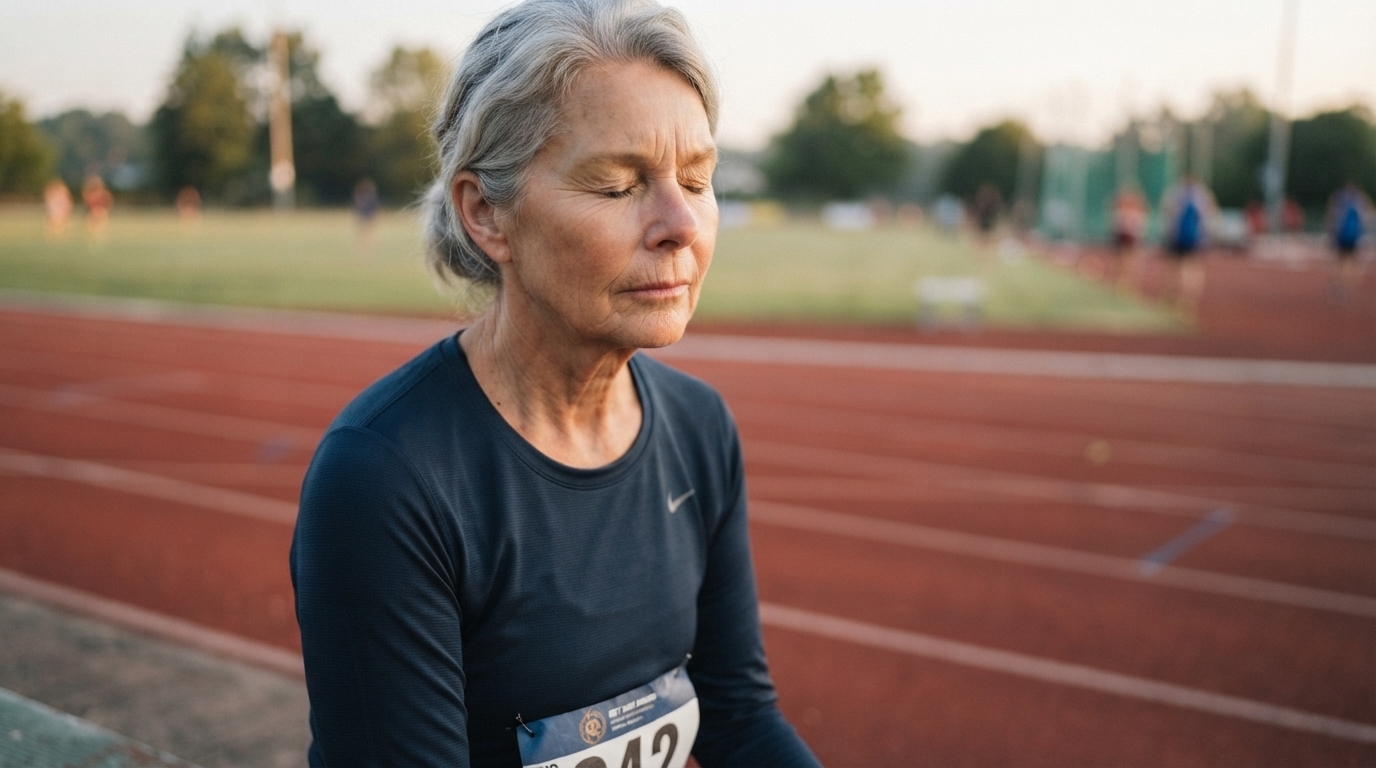
Walk into most coaching setups and you’ll find the same assumption baked into everything: the athlete in front of you is 22, recovering in 48 hours, and building toward a first peak rather than protecting a long career of them. Programming, testing, even the language coaches use — it’s all calibrated for a body that hasn’t yet had to negotiate with itself.
If you’re 35, 45, or 65 and still competing, you’ll know the moment this stops working. The session that used to leave you fresh by Thursday now needs until Saturday. The “just push through it” advice that worked at 24 turns into three weeks on the sidelines at 44. And the coach who built their reputation on juniors and open-age squads runs out of answers, because the answers were never written for you in the first place.
This isn’t a fitness problem. It’s an information and infrastructure problem — and it’s the reason The Master Athlete exists.
The gap nobody built for
Masters athletics is not a shrinking corner of the sport. It’s one of the fastest-growing parts of it. Every year, more people are stepping back onto a track, into a pool, or onto a start line in their late thirties and beyond — some returning after decades away, others just getting started. The demand is there. The competitive scene is there, with genuine age-graded rivalries and national and international championships that mean something.
What’s missing is coaching and data built specifically for this population. Recovery windows that widen with age. Injury patterns that shift. The way strength, power, and mobility trade off differently in a body that’s also managing a job, a family, and thirty extra years of wear than they were at 20. Mainstream coaching resources treat all of this as an edge case, a caveat, a footnote — “modify as needed for older athletes.” Masters athletes don’t need a modified programme. They need a first-class one.
Why this shows up as a data problem, not just a coaching one
Here’s the part that’s easy to miss: even when a masters athlete finds a good coach, they’re often working half-blind. Age grading — the standard method for comparing performances fairly across age bands — is frequently done wrong, using rough factor-based adjustments instead of proper comparison against the athlete’s actual five-year age band world record. Training data doesn’t get separated properly from competition data, so a strong session gets muddled with a real result. Progress gets judged against irrelevant benchmarks, or against no benchmark at all.
The result is athletes and coaches making decisions on instinct where they could be making them on evidence. That’s true at every level of sport, but it’s especially costly for masters athletes, where the training margin for error is smaller and the cost of a bad decision — an injury, a missed season — is higher.
What “built for masters athletes” actually looks like
This is the standard we’ve built The Master Athlete around, and it comes down to a few non-negotiables:
Age-appropriate benchmarking. Comparing your performance against your own strict five-year age band, using recognised standards — not a generic formula that treats a 38-year-old and a 58-year-old the same way.
Recovery-aware programming. Training plans that account for the way recovery genuinely changes with age, rather than asking you to recover like someone twenty years younger.
Injury monitoring as standard, not an afterthought. For a population where a single bad injury can end a season or a comeback, tracking load and flagging risk needs to be built in from day one, not bolted on.
Real progression tracking. The ability to see your own trajectory over years, not just weeks — because masters careers are measured in seasons and comebacks, not single training blocks.
None of this is exotic. It’s just specific. And specificity is exactly what’s been missing.
Built by someone living it
I’m not approaching this as an outside observer. I’m a masters sprinter myself, and I’ve spent close to a decade in the events industry — most recently organising the Glasgow 2028 European Masters Indoor Championships — which means I see this gap from both sides: as a competitor trying to train smart, and as someone building the events this community shows up for.
That dual view is exactly why The Master Athlete looks the way it does. It’s not a general fitness app with an age filter. It’s coaching infrastructure built around the actual physiology, actual data needs, and actual ambitions of athletes who refuse to accept that competing well is a young person’s game.
Where this goes next
Over the coming weeks we’ll be publishing more on the specifics — how age grading should actually work, what periodisation looks like once you’re managing decades of training history instead of one season, and the mindset shifts that separate masters athletes who keep improving from those who plateau.
If you’re a masters athlete who’s felt this gap firsthand — coached by systems that weren’t built for you, or coaching others without the right tools — this is the start of fixing that. We’re opening early access through the Founder Programme in the coming weeks, and it’s built specifically for people who’ve felt exactly what this post describes.

